
We offer a wide range of in-office testing and procedures for your convenience. For advanced or inpatient care, our team delivers 24/7 hospital coverage at major facilities throughout the region. We offer board-certified services in:
Interventional Cardiology
Treats blocked or narrowed heart arteries to improve blood flow and prevent heart attacks.
Angioplasty and Stenting
Opens blocked heart arteries using a small balloon, then places a stent to keep the artery open.
Atherectomy
Removes hardened plaque from arteries to restore better blood flow.
Percutaneous Coronary Intervention (PCI)
A minimally invasive procedure to treat coronary artery disease, including angioplasty and stenting.
Peripheral Vascular Interventions
Treats blockages in arteries of the legs or arms using angioplasty or stents.
Structural Interventional Cardiology
Treats conditions that affect the heart’s valves, walls, chambers or muscles, reducing the need for invasive, open-heart surgeries.
Atrial/Patent Foramen Ovale (ASD/PFO) Closure
Closes a small opening in the wall between the heart’s upper chambers to reduce stroke risk.
TAVR
A minimally invasive procedure to replace a narrowed aortic valve without open-heart surgery.
WATCHMAN LAA Closure
Places an implant to prevent blood clots from leaving the heart’s left atrial appendage.
Electrophysiology
Treats conditions that affect the heart’s electrical system, including arrhythmias.
Catheter Ablation
Targets and destroys tissue that triggers irregular heart rhythms.
Pacemaker/Device Procedures
Implantation or replacement of pacemakers and defibrillators that regulate heart rhythm.
Cardiac Resynchronization Therapy (CRT)
Improves heart function by coordinating how the heart’s chambers beat.
Tilt Table Test
Test to evaluate patients with unexplained fainting (syncope) and to confirm if the underlying cause is vasovagal syndrome.
WATCHMAN FAQs
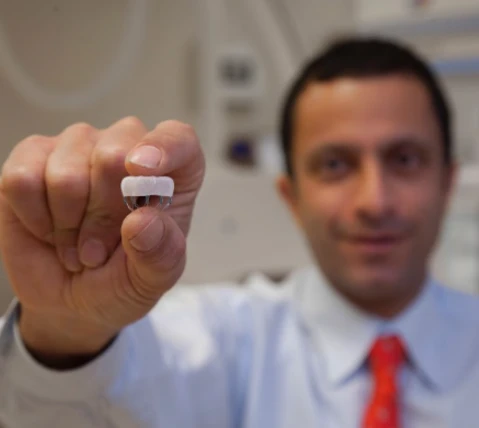
The WATCHMAN is a small device your heart specialist implants into your heart to prevent complications caused by some kinds of atrial fibrillation related to atrial fibrillation. This one-time procedure can eliminate the need to take a blood thinner and minimize your chance of a stroke.
WATCHMAN implants prevent blood clots by closing off the part of your heart (the left atrial appendage, or LAA) that produces most stroke-causing clots. The implant is made of light, compact materials and is about the size of a quarter. The WATCHMAN implant fits into the LAA to permanently close it off and minimize your risk of a stroke without the need to take blood-thinning medicines.
After reviewing your medical history, symptoms, and lifestyle, the Memorial Katy Cardiology Associates team lets you know if you’re a candidate for WATCHMAN implantation. They check your vital signs, complete a physical exam, and any necessary testing to diagnose your condition.
Before the procedure, you’ll receive a general anesthetic or sedation to help you relax. Your specialist makes a small incision in your upper leg with only a small needle stick. They guide the WATCHMAN implant into your heart’s LAA in as little as 20 minutes.
After WATCHMAN implantation, you might go home the same day. Some patients need to spend at least one night in the hospital for observation. Have someone drive you home and take the prescribed medication as directed by your provider. Heart tissue eventually grows over the implant to form a blood-clot barrier. In studies, close to 99% of patients can stop taking blood thinners shortly after the procedure. Call the nearest Memorial Katy Cardiology Associates office today to learn more about WATCHMAN implantation and if it’s right for you.